
TABLE OF CONTENTS
- Modulators
- Sample & Hold
- Wavefolding
- Analogue Distortion
- MIDI & CV (Control Voltage)
- Arpeggiators
- Sequencers
Modulators
PWM (Pulse Width Modulation)
Pulse Width Modulation (PWM) is a synthesis technique in which the duty cycle—or width—of a square wave is continuously varied to alter its harmonic content. A standard square wave contains only odd harmonics, but when its pulse width is modulated, the symmetry of the waveform changes, causing different harmonics to be emphasized or suppressed. This produces a rich, animated timbre that is far more dynamic than a static square wave.
In a typical implementation, a waveform generator produces a square wave at a fixed frequency, while the pulse width is modulated by an external source such as an LFO or an envelope generator. By adjusting the modulation rate and depth, the resulting sound can range from subtle, chorus‑like motion to aggressive, harmonically shifting textures.
PWM is widely used to create lush strings, brass‑like tones, and evolving pads, as the constant movement in harmonic content mimics the natural fluctuations found in acoustic instruments. In electronic dance music, PWM is also a popular tool for crafting distinctive basslines and lead sounds, thanks to its ability to produce both warmth and intensity within a single patch.

Ring Modulation
Ring modulation is a synthesis technique in which two audio signals are multiplied together, producing a new signal composed of their sum and difference frequencies. Unlike simple mixing, this process removes the original input frequencies when implemented in its pure form, resulting in a timbre that is often metallic, inharmonic, or otherworldly. Because the resulting frequencies depend on the interaction between the two sources, ring modulation can yield tones that range from subtly textured to highly experimental.
When one input is a steady oscillator and the other is a dynamic source - such as an LFO, audio-rate oscillator, or complex waveform - the output exhibits shifting sidebands and evolving spectral content. This makes ring modulation a powerful tool for generating robotic tones, bell‑like textures, dissonant drones, and unpredictable harmonic structures.
Ring modulation is widely used in ambient, experimental, and industrial music, where its ability to introduce depth, motion, and complexity helps create distinctive sonic identities. By adjusting the frequency relationship, modulation depth, and input waveforms, sound designers can sculpt everything from subtle harmonic enhancements to extreme, boundary‑pushing timbres.
FM (Frequency Modulation)
Frequency Modulation (FM) synthesis is a technique in which the frequency of one oscillator—the carrier—is continuously varied by another oscillator known as the modulator. This interaction generates complex sidebands whose distribution and intensity depend on the modulation depth and the frequency ratio between the two oscillators. By adjusting these parameters, FM synthesis can produce an exceptionally wide range of timbres, from bell‑like tones and glassy textures to metallic, robotic, and highly inharmonic sounds.
Working with FM typically begins by selecting simple waveforms for both the carrier and modulator, then gradually increasing the modulation index to introduce additional harmonics. Exploring different frequency ratios - integer, fractional, or non‑integer - reveals dramatically different spectral behaviors. Envelopes can be applied to either the carrier or modulator to shape the evolution of the timbre over time, while filters may be used to refine or tame the resulting harmonic complexity.
FM synthesis rewards experimentation: subtle adjustments to modulation depth, envelope timing, or oscillator ratios can yield entirely new sonic identities. This makes it a powerful tool for crafting bell tones, metallic textures, evolving pads, and expressive digital‑style leads.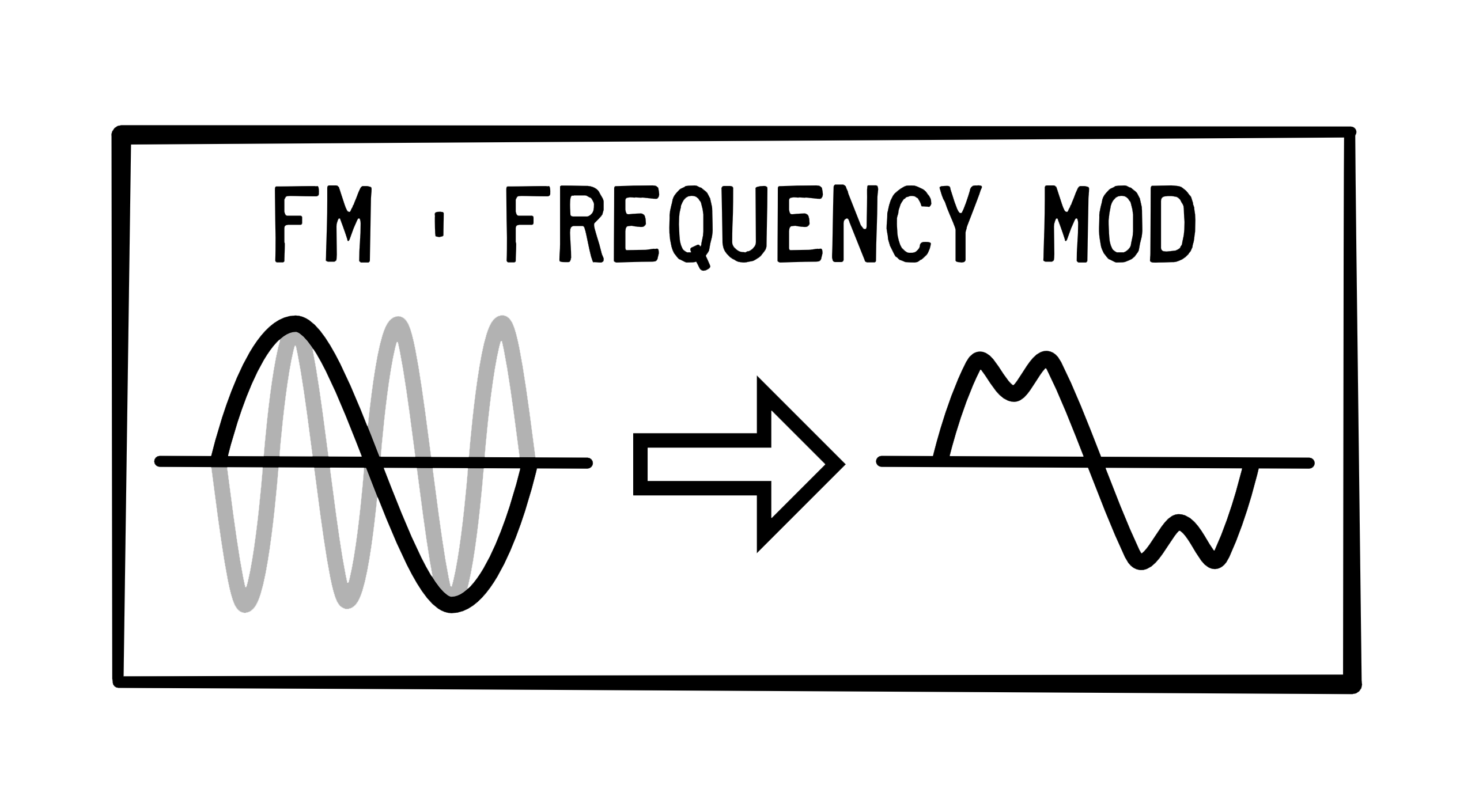 Sample & Hold
Sample & Hold (S&H) is a modulation technique in which an incoming signal is sampled at discrete intervals and the captured value is held until the next sampling event. This produces a stepped, staircase‑like control signal that can be used to generate rhythmic, random, or glitch‑based modulation patterns.
One of the primary uses of S&H is to introduce controlled randomness into a patch. By sampling a noise source or other unpredictable signal, the S&H circuit outputs a sequence of discrete values that create evolving, non‑repetitive modulation. This is especially effective for crafting randomized pitch sequences, filter movements, or amplitude variations.
When paired with a Low‑Frequency Oscillator, the LFO typically determines the sampling rate, allowing the stepped modulation to lock into rhythmic patterns that can be synced to your track’s tempo. This makes S&H ideal for generating pulsing, syncopated, or tempo‑locked modulation effects.
At higher sampling rates, S&H can also be used to create glitchy, stuttering, or digital‑artifact‑like textures by rapidly capturing and freezing fragments of an audio signal. This technique is popular in experimental, electronic, and futuristic sound design, where abrupt tonal shifts and fragmented motion add intensity and character.

Wavefolding
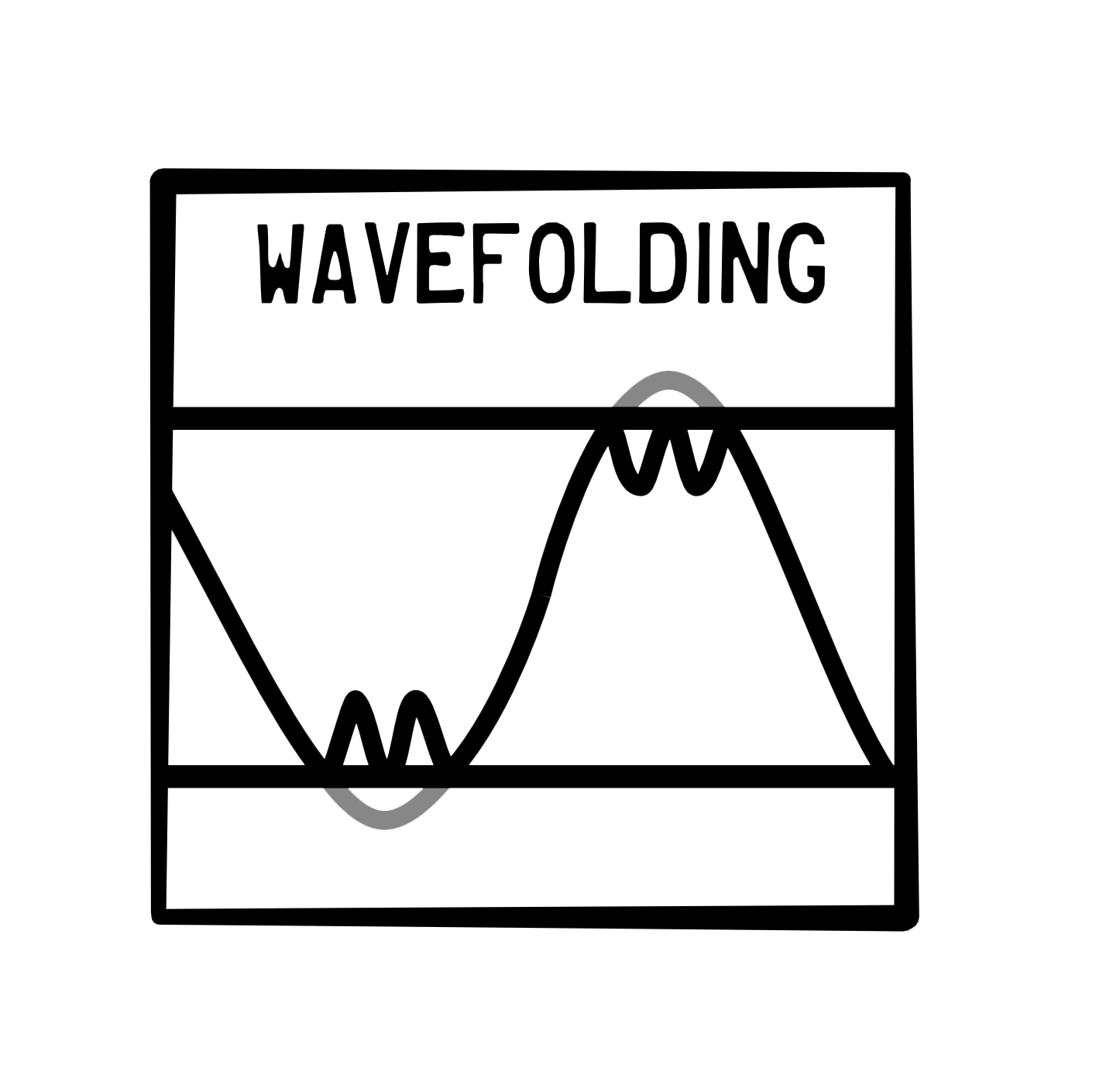
Wavefolding is a non‑linear waveshaping process in which a waveform is driven beyond a defined threshold and then folded back onto itself, creating new peaks and inversions. Each fold introduces additional harmonic content, allowing a simple waveform—such as a sine, triangle, or sawtooth—to be transformed into a rich, complex timbre. Unlike filtering, which removes harmonics, wavefolding adds harmonics, making it a core technique in West Coast synthesis and other experimental sound‑design approaches.
By adjusting parameters such as the fold amount or fold threshold, you can control the intensity, density, and character of the resulting waveform. Subtle folding produces gentle harmonic enhancement, while deeper folding yields aggressive, bright, and highly animated textures.
Wavefolding is effective for crafting evolving soundscapes, edgy basslines, and distinctive lead tones, especially when combined with modulation sources like LFOs, envelopes, or dynamic amplitude control. Its ability to transform simple waveforms into harmonically rich structures makes it a powerful tool in modern electronic music production.
Analogue Distortion
Analogue synthesizers generate sound using continuous electrical signals, and when these signals are driven beyond the circuit’s linear operating range, they begin to clip, producing natural non‑linear distortion. This behaviour is inherent to analogue circuitry: as the waveform amplitude increases, components such as transistors and op‑amps gradually saturate, causing the waveform to flatten or deform. The result is a richer, more harmonically complex timbre, often perceived as warmth or character.
The Moog Grandmother provides a clear example of this phenomenon. With the OSC 1 mixer set around the 12 o’clock position, the output waveform remains clean and well‑defined. As the mixer level is pushed higher, the VCO begins to saturate, introducing subtle analogue distortion. Switching to a harmonically dense waveform—such as a sawtooth—further enhances the audible impact of this saturation, as the added harmonics interact with the circuit’s non‑linear response.
This type of analogue overdrive is a defining characteristic of many classic synthesizers, contributing to their expressive, organic sound. Understanding how mixer levels interact with circuit headroom is an important part of mastering analogue synthesis and shaping the tonal behavior of your instrument.
MIDI & CV (Control Voltage)
MIDI (Musical Instrument Digital Interface) is a digital communication protocol that enables electronic instruments, computers, and controllers to exchange performance data. MIDI transmits discrete messages—such as note on/off, pitch, velocity, modulation, and control‑change values—allowing devices to synchronize, trigger events, and automate parameters with precision. Because MIDI is digital, it conveys instructions, not audio, making it highly flexible for sequencing and complex control setups. It forms the backbone of modern digital music workflows.
CV (Control Voltage), by contrast, is an analogue method of modulation and control. It uses continuously varying voltages to influence parameters such as pitch, amplitude, filter cutoff, and more. CV is foundational to modular synthesis and many analogue instruments, offering smooth, immediate, and highly expressive control because the voltage changes are continuous rather than stepped. This allows for nuanced behaviors such as microtonal pitch shifts, fluid modulation, and organic parameter movement.
While MIDI excels at structured communication and interoperability, CV provides a direct, tactile connection to the underlying circuitry. Many modern systems combine both approaches, using MIDI for sequencing and digital control while relying on CV for expressive modulation and analogue signal shaping.
Arpeggiators
An arpeggiator is a performance and sequencing tool found in many synthesizers and production environments that automatically converts a held chord into a pattern of individual notes. Instead of sounding all notes simultaneously, the arpeggiator cycles through them according to a user‑defined pattern, creating rhythmic and melodic motion that enhances musical phrasing.
Arpeggiators analyze the notes you play on a keyboard or input into a sequencer, then reorder and replay them using patterns such as up, down, up‑down, random, or fully user‑programmed sequences. Parameters like rate, gate length, octave range, and swing allow for detailed control over the resulting phrase, enabling everything from subtle rhythmic accents to driving, energetic patterns.
Because arpeggiators generate continuous, tempo‑locked movement, they are widely used to add momentum, complexity, and harmonic variation to a track. They can produce intricate melodic lines, evolving harmonic structures, and fast passages that would be difficult—or impossible—to perform manually. When combined with modulation sources such as LFOs, envelopes, or dynamic filtering, arpeggiators become powerful tools for crafting expressive, evolving musical textures.
Sequencers
A sequencer is a control device or software tool that allows you to program, arrange, and automate musical events—typically notes, rhythms, and parameter changes—in a defined, step‑based order. Each step in the sequence can store information such as pitch, gate length, velocity, and timing offsets, giving you precise control over how musical patterns unfold.
Sequencers can be used to construct anything from simple basslines and drum patterns to fully developed, evolving compositions. Because they generate notes automatically, sequencers enable self‑playing structures that would be difficult to perform manually, especially when working with fast tempos, polyrhythms, or complex timing.
Modern sequencers often integrate features such as parameter automation, probability, ratcheting, and pattern chaining, allowing for intricate and expressive musical behavior. They are essential tools in electronic music production, modular synthesis, and live performance, forming the backbone of many step‑based workflows and generative systems.
Was this article helpful?
That’s Great!
Thank you for your feedback
Sorry! We couldn't be helpful
Thank you for your feedback
Feedback sent
We appreciate your effort and will try to fix the article