Synthesis 101 | An Introduction to Subtractive Synthesis

TABLE OF CONTENTS
- Subtractive Synthesis
- Voltage Controlled Oscillators (VCO)
- Voltage Controlled Filters (VCF)
- Envelope Generator (EG)
- Low-Frequency Oscillator (LFO)
- Voltage Controlled Amplifier (VCA)
- Noise Generator
- Mixers
- Preamp
- Signal Flow
- Polyphony
- Semi-Modular vs Desktop Synthesizers
- What are the benefits of using an Analogue Synthesizer?
- Where to go from here?
Subtractive Synthesis
Subtractive synthesis is a method of sound generation in which a harmonically rich source signal is shaped by selectively removing frequency components. An oscillator first produces a complex waveform—commonly a sawtooth or square wave—containing a broad spectrum of harmonics. This signal is then routed through a filter, which attenuates specific portions of the spectrum to achieve the desired timbre.
Typical filter types include low‑pass, high‑pass, band‑pass, and notch filters, each shaping the harmonic content in distinct ways. Filter parameters such as cutoff frequency and resonance can be dynamically modulated using an envelope generator or LFO, allowing the sound to evolve over time.
By adjusting these controls, sound designers can create a wide range of timbres—from smooth pads to aggressive basses—making subtractive synthesis a versatile and widely used approach in both hardware and software synthesizers.

Voltage Controlled Oscillators (VCO)
A Voltage‑Controlled Oscillator (VCO) is a fundamental element of analogue synthesizer architecture, responsible for generating the primary audio signal. Its oscillation frequency is determined by an input control voltage, enabling precise tuning and expressive modulation. This voltage‑based control allows the oscillator to respond dynamically to performance gestures and modulation sources.
A VCO can generate multiple waveform types—including sine, triangle, sawtooth, and square waves—each offering distinct harmonic structures and timbral characteristics. These waveforms can be further shaped by modulation from external voltage sources such as LFOs or envelope generators, allowing for complex movement and evolving textures. Frequency modulation introduces additional depth, producing vibrato, audio‑rate FM, and other dynamic effects.
Accurate tuning and calibration are essential to ensure proper pitch tracking across the keyboard, maintaining consistent intervals and musical accuracy. VCOs may also be synchronized with other oscillators or subjected to frequency modulation to create harmonically rich, animated sounds—techniques widely used in sound design and electronic music production.

Sine Wave
The sine wave is the most fundamental periodic waveform, defined by a smooth, continuous oscillation that contains no harmonic content. Its spectrum consists solely of a single fundamental frequency, resulting in an exceptionally pure tone. Because of this harmonic simplicity, sine waves are well‑suited for soft timbres, low‑frequency bass components, and minimalistic melodic material.
In synthesis, sine waves are frequently employed for generating pure tones, performing audio test signals, and creating bell‑like or percussive textures when shaped with amplitude envelopes. Their lack of overtones also makes them an effective starting point in subtractive synthesis workflows where additional harmonic content is introduced through modulation or filtering.
Square Wave
The square wave is characterized by a harmonically rich spectrum composed exclusively of odd‑numbered harmonics, giving it a distinctly bright and assertive timbre. Its abrupt transitions between high and low amplitude levels contribute to a tone often perceived as aggressive and punchy, making it well‑suited for lead sounds, basslines, and percussive synthesis.
Square waves are strongly associated with early digital and chiptune aesthetics, lending them a nostalgic quality reminiscent of classic video‑game sound hardware. They are also central to pulse‑width modulation techniques, where varying the duty cycle introduces dynamic timbral shifts and animated textures. These properties make the square wave a versatile tool in modern sound design and electronic music production.
Triangle Wave
The triangle wave occupies a spectral position between the sine and square waveforms, containing a fundamental frequency accompanied by odd‑numbered harmonics whose amplitudes decrease rapidly with frequency. This results in a timbre that is significantly softer than a square wave yet richer than a pure sine, often described as warm, rounded, and subtly textured.
Its smooth harmonic profile makes the triangle wave well‑suited for pads, soft lead tones, and gentle bass patches. In subtractive synthesis, triangle waves serve as effective starting points for sounds requiring gradual attack and decay characteristics, such as synthetic string or flute‑like timbres. Their controlled harmonic content allows for smooth filtering and expressive modulation without introducing excessive brightness.
Sawtooth Wave
The sawtooth wave is defined by its steep, linear rise and abrupt reset, producing a spectrum that contains both even and odd harmonics. This dense harmonic structure gives the waveform its characteristically bright, incisive timbre and makes it one of the most versatile sources in subtractive synthesis.
Because of its broad spectral content, the sawtooth wave is highly effective for bright lead tones, lush pads, and powerful bass patches. Its harmonic richness also makes it an ideal starting point for filtering, modulation, and other shaping techniques commonly used in modern sound design.
Why Feet Instead Of Octave?
In many synthesizers—particularly those inspired by organ‑style architectures—oscillator pitch is expressed using “feet” notation, a system inherited from pipe organs. Instead of describing pitch shifts in terms of octaves, this approach relates tuning to the physical length of an organ pipe, where longer pipes produce lower frequencies.
In this system, 8′ (eight‑foot) is treated as the reference pitch. Changing the foot value alters the oscillator’s frequency according to simple proportional relationships: halving the foot length raises the pitch by one octave, while doubling it lowers the pitch by one octave. This provides a clear, musically intuitive way to understand how oscillators will interact when layered.
For example, setting one oscillator to 4′ and another to 16′ establishes a two‑octave interval, with the 4′ oscillator sounding two octaves above the 16′ setting. Understanding feet notation helps in shaping harmonic structures, designing layered patches, and achieving precise musical relationships between oscillators in subtractive synthesis and other synthesis workflows.
Voltage Controlled Filters (VCF)
A Voltage‑Controlled Filter (VCF) is an analogue or digital filtering circuit designed to shape an audio signal by selectively passing certain frequency components while attenuating others. Its behavior is governed by parameters such as cutoff frequency and resonance, both of which can be modulated via external control voltages.
VCFs are available in several topologies—including low‑pass, high‑pass, band‑pass, and notch filters—each offering distinct spectral‑shaping characteristics suited to different sound‑design applications.
The resonance parameter boosts frequencies near the cutoff point, creating a pronounced peak in the filter’s response curve. This emphasizes specific harmonics and imparts a more focused, resonant character to the sound. At high resonance settings, many VCF designs can enter self‑oscillation, generating a stable sine‑like tone even without an input signal—useful for tonal effects, percussion synthesis, and modulation sources.
Because VCFs are voltage‑controlled, their parameters can be modulated in real time by envelope generators, LFOs, sequencers, and other control‑voltage sources. This enables dynamic timbral shaping, allowing the filter to evolve continuously over time. Through modulation of cutoff, resonance, and filter mode, VCFs play a central role in sculpting the harmonic content of a signal and producing a wide range of tonal variations and expressive textures.

Moog 24dB Per Octave Four Pole Ladder Filter
A ladder filter is a classic analogue filter topology widely used in synthesizers for shaping timbre by passing selected frequency components while attenuating others. Its name derives from the circuit’s structure, which resembles a ladder formed by a series of transistor‑capacitor stages. This multi‑stage configuration produces a smooth, musically responsive filtering behavior that has become strongly associated with warm, harmonically rich synthesizer tones.
The filter’s cutoff frequency defines the point at which attenuation begins, typically expressed in dB per octave. A ladder filter with a 24 dB/octave slope reduces signal amplitude by 24 dB for every octave beyond the cutoff, resulting in a steep and highly effective roll‑off. This slope corresponds to the filter’s number of poles, with each pole contributing 6 dB/octave of attenuation. The classic Moog ladder filter, for example, uses four poles, yielding the characteristic –24 dB/octave response.
This steep roll‑off enables dramatic spectral shaping, making ladder filters ideal for pronounced subtractive‑synthesis effects. Their inherent non‑linearities also contribute to the warm, saturated character that musicians and sound designers value. Ladder filters remain central to many synthesizer designs due to their distinctive tonal behavior and expressive musicality.
State Variable Filter
A state‑variable filter (SVF) is an active filter topology capable of generating low‑pass, high‑pass, band‑pass, and notch responses simultaneously from a single circuit structure. It achieves this by using multiple integrator stages and feedback paths, each representing a different “state” of the signal—hence the name state variable.
The architecture allows precise control over cutoff frequency, resonance, and filter mode, while maintaining excellent stability across a wide range of settings. Because the filter outputs are derived from different points within the circuit, the SVF provides smooth, continuous transitions between filter types and supports dynamic modulation without compromising response accuracy.
Envelope Generator (EG)
An envelope generator is a control‑voltage source used to shape the amplitude contour of a sound over time, enabling dynamic and expressive articulation. It produces a time‑varying control signal that defines how a parameter—most commonly loudness—evolves from the moment a note is triggered until it is released.
Attack, Decay, Sustain & Release (ADSR)
An ADSR envelope generator shapes the time‑dependent behavior of a parameter using four sequential stages: attack, decay, sustain, and release.
The attack stage defines the rise time from silence to peak level. The decay stage determines how quickly the signal falls from that peak to the sustain level. The sustain stage specifies the steady‑state level maintained while the note is held. The release stage controls the rate at which the signal returns to silence once the note is released.
Envelope generators are central to shaping the articulation of individual notes in synthesizers, enabling everything from sharp, percussive transients to long, evolving pads and drones. Because envelopes output control voltages rather than audio, they can be routed to a wide range of destinations beyond amplitude, including filter cutoff, pitch, and modulation depth. This flexibility makes them essential tools for expressive sound design and dynamic timbral shaping.

Delay & Hold
The delay stage introduces a programmable pause before the envelope enters its attack phase. During this interval, the output remains at zero (or the baseline level), allowing the onset of the sound to occur later in time. This is particularly useful for patches that require a gradual or staggered entry—such as swelling pads, layered textures, or soft lead lines—where the rise in amplitude should not begin immediately. Adjusting the delay time determines how long the envelope waits before initiating its upward trajectory.
After the attack and decay stages, the hold stage maintains the envelope at a specified level for a defined duration before transitioning to the release phase. This provides a stable plateau in the envelope’s contour, enabling more complex dynamic shapes. In percussive or transient‑rich sounds, a brief hold can preserve the peak level momentarily before the signal begins to fade, adding weight and definition. In sustained or evolving patches, the hold stage can help create controlled transitions and more intricate amplitude or modulation behaviors.
Because both delay and hold stages output control voltages, they can be applied not only to amplitude but also to parameters such as filter cutoff, pitch, or modulation depth, expanding the expressive potential of the envelope generator.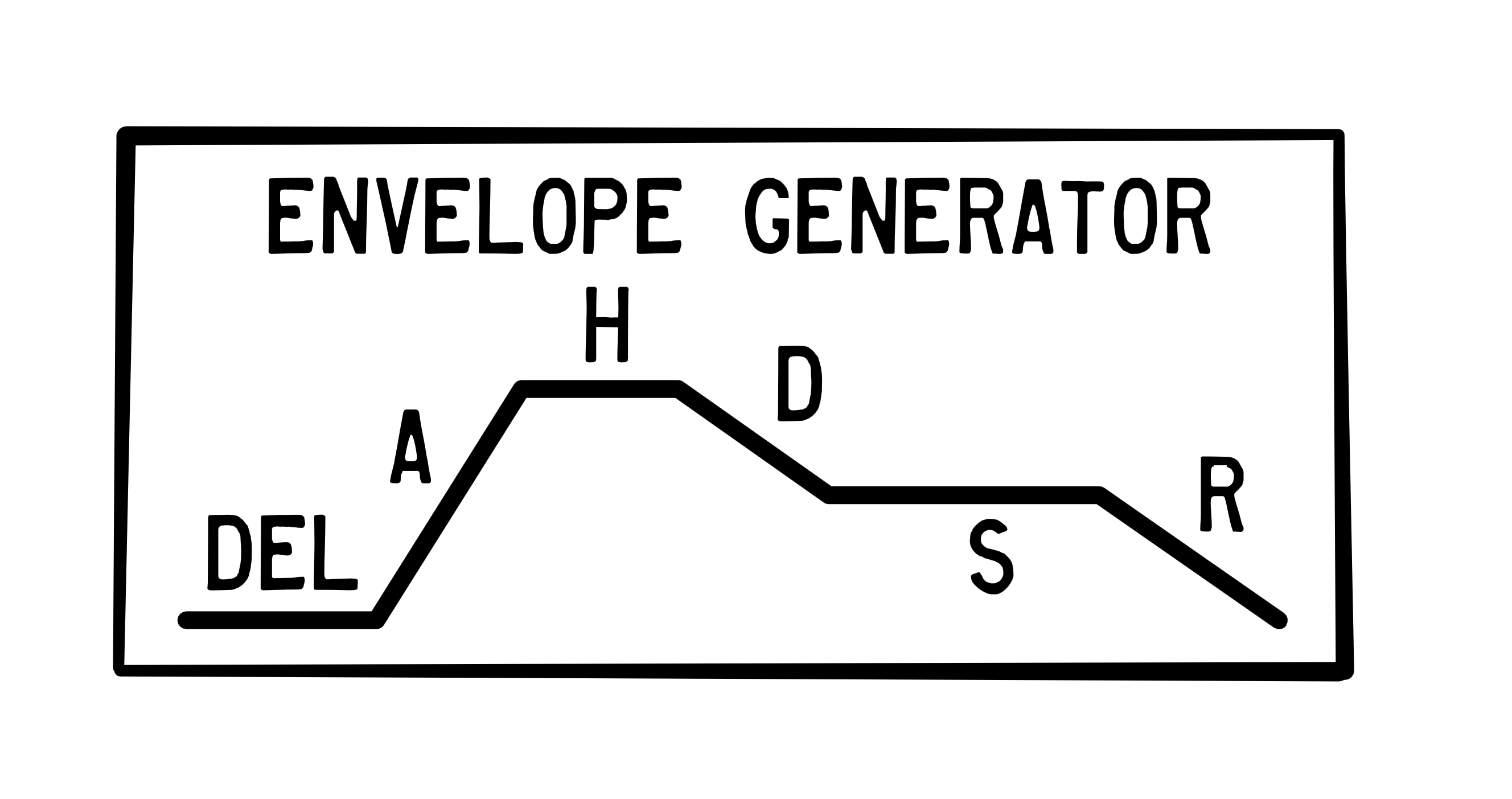
Low-Frequency Oscillator (LFO)
A Low‑Frequency Oscillator (LFO) is a modulation source that operates below the audible frequency range, typically between 0.1 Hz and 20 Hz. It generates a periodic control signal—not an audio signal—that can be routed to parameters such as pitch, amplitude, or filter cutoff to introduce cyclical variation.
By continuously modulating these parameters, an LFO adds motion, depth, and dynamic behavior to a sound. For example, applying an LFO to a filter’s cutoff frequency produces a periodic sweeping effect, often referred to as a filter wobble or filter sweep. When routed to pitch, it can create vibrato; when routed to amplitude, it produces tremolo.
LFOs can generate a variety of waveforms—including sine, triangle, square, and sawtooth—each imparting a distinct modulation character. Smooth waveforms like sine and triangle create gentle, continuous modulation, while square and sawtooth waves produce sharper, more abrupt changes.
Experimenting with different waveform shapes, modulation depths, and routing options is essential for unlocking the expressive potential of LFOs in subtractive synthesis and broader sound‑design workflows.
Voltage Controlled Amplifier (VCA)
A Voltage‑Controlled Amplifier (VCA) regulates the amplitude of an audio signal according to an incoming control voltage (CV). When the control voltage is high, the VCA increases gain, resulting in a louder output; when the voltage is low, the VCA reduces gain, attenuating the signal. This voltage‑dependent behavior allows the amplitude of a sound to be shaped dynamically and with precise timing.
A common application is routing an envelope generator to the VCA, enabling the amplitude to follow an ADSR contour. By adjusting the attack, decay, sustain, and release stages, the VCA can produce anything from sharp, percussive transients to smooth, evolving volume profiles.
In VCA‑based synthesis, the amplitude is controlled by external modulation sources, which may include envelope generators, LFOs, sequencers, or even MIDI‑derived control signals. Modulating the control voltage in real time allows for expressive volume shaping, tremolo effects, rhythmic gating, and complex dynamic behaviors essential to modern sound design.
Noise Generator
White noise is a broadband signal containing equal energy at all frequencies, resulting in a bright, static‑like timbre. Its uniform spectral distribution makes it useful in subtractive synthesis for adding texture, brightness, and high‑frequency detail to a sound. White noise is commonly employed in the synthesis of percussive elements, such as hi‑hats and snare drums, where its wide frequency content helps create sharp, transient‑rich attacks.
Pink noise, by contrast, distributes energy equally per octave, producing a spectrum that decreases in amplitude as frequency increases. This results in a smoother, more natural timbre compared to white noise. In subtractive synthesis, pink noise is often used to introduce warmth, depth, and low‑frequency weight. It is well‑suited for shaping bass textures, pad layers, and atmospheric elements where a more balanced spectral profile is desired.
Both noise types serve as versatile sound sources, offering distinct spectral characteristics that can be filtered, modulated, or layered to create a wide range of sonic textures.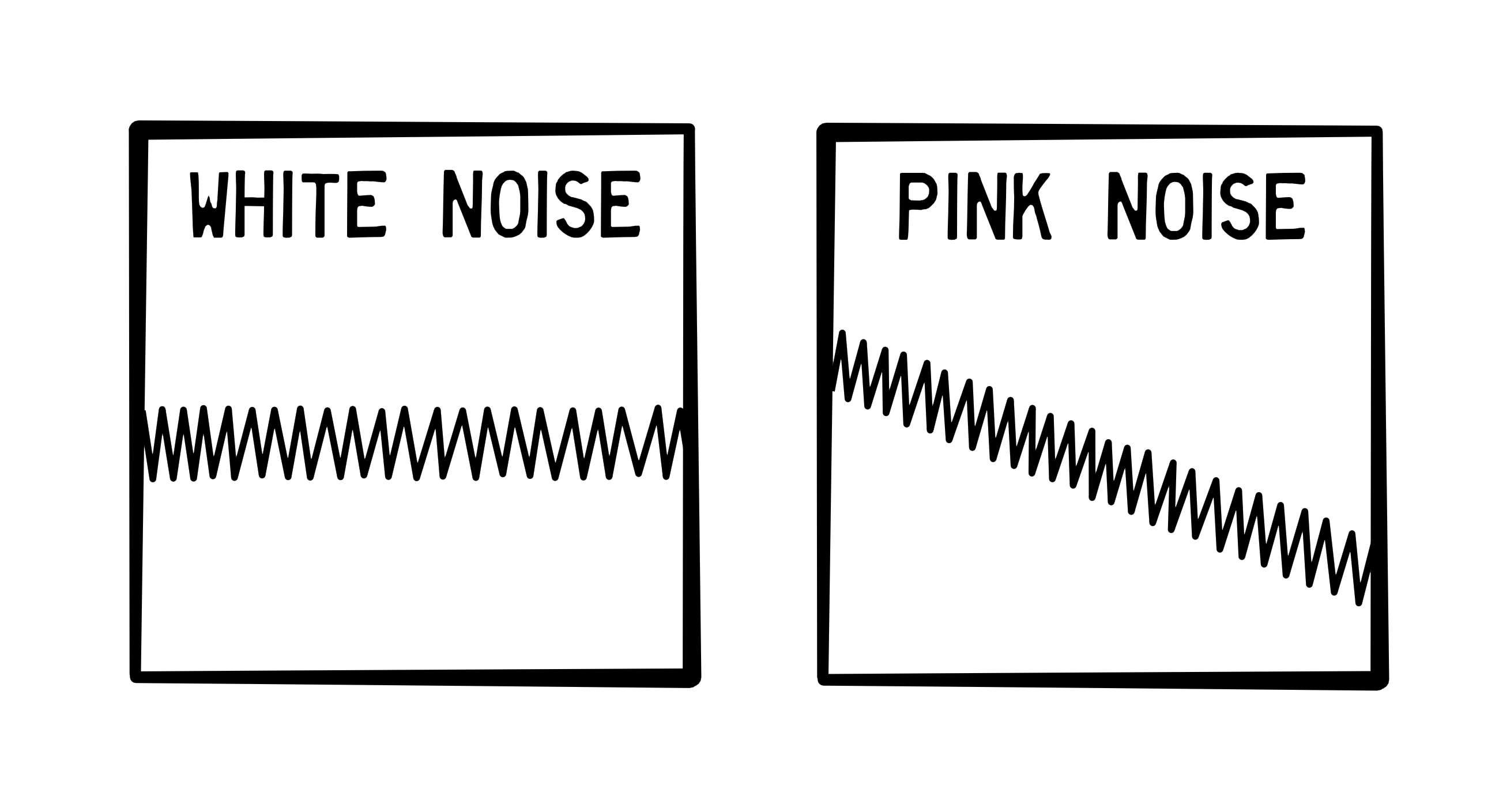
Mixers
A mixer provides level control for multiple audio or modulation sources, allowing each signal to be adjusted independently before they are combined. By varying the gain of each input channel, you can shape the relative balance of oscillators, noise sources, and modulation signals, enabling the creation of dynamic, evolving timbres.
Some mixers also support blending or attenuating modulation sources, allowing you to mix control voltages in addition to audio. Adjusting these levels in real time can significantly alter the harmonic structure and movement of a patch. Alternating or modulating the input levels—whether audio or CV—can produce dramatic shifts in tone, rhythmic variation, and complex textures within a synthesizer’s signal path.
Preamp
The preamplifier is the final stage in the synthesizer’s internal signal chain, responsible for boosting the audio signal to an appropriate level for downstream processing or external equipment. Its primary role is to ensure that the signal has sufficient gain, clarity, and headroom before being routed to mixers, effects units, or recording interfaces.
Although both a preamp and a Voltage‑Controlled Amplifier manipulate signal amplitude, their functions differ fundamentally. A VCA provides voltage‑dependent control, enabling automation of loudness through modulation sources such as envelope generators, LFOs, or MIDI‑derived control signals. In contrast, a preamp is designed primarily for signal conditioning and gain staging, ensuring the audio level is strong and clean enough for the next stage in the audio path.
Together, VCAs and preamps form a complementary system: the VCA shapes dynamic behavior, while the preamp ensures proper signal strength for external amplification, processing, or recording.
Signal Flow
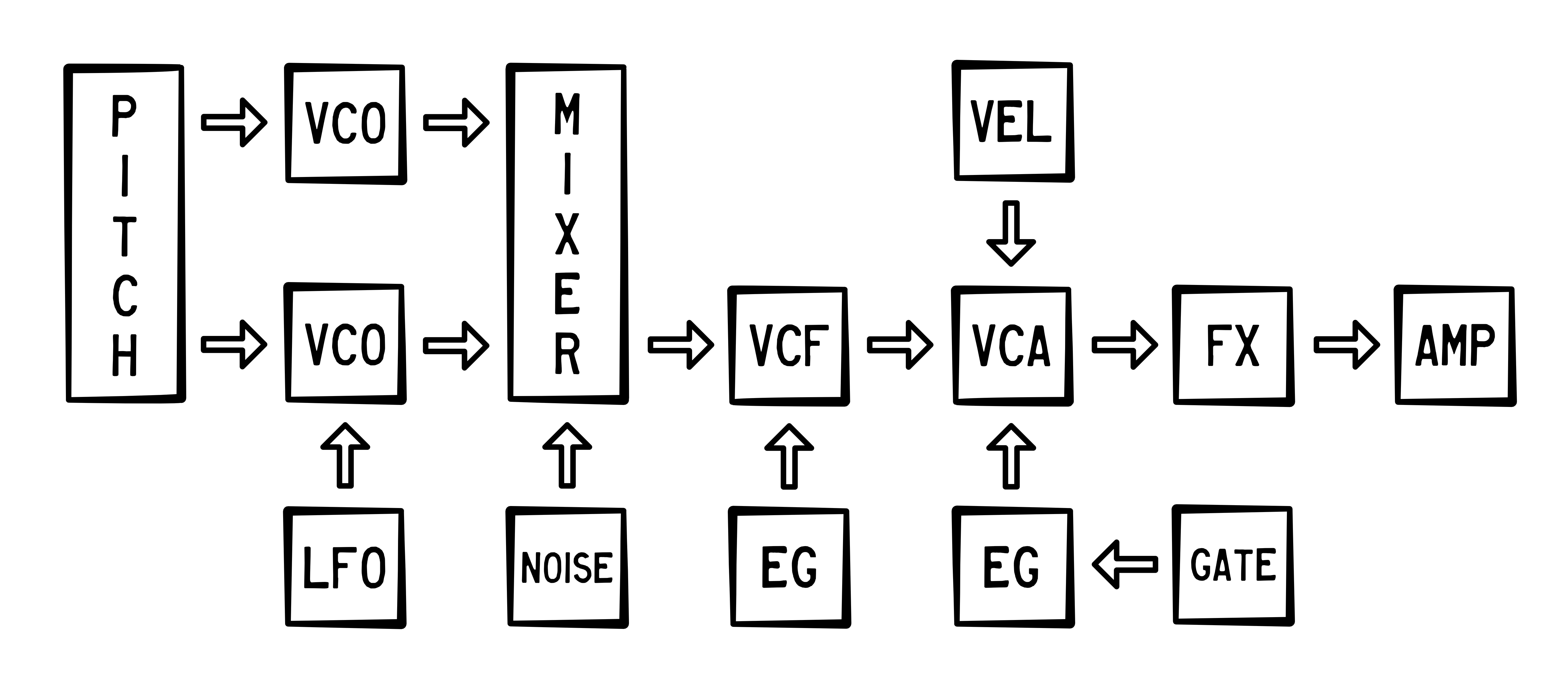
A clear understanding of a synthesizer’s signal flow is essential for effective sound design. Signal flow refers to the pathway through which audio and control signals are generated, shaped, and routed within a synthesis system. This path typically begins with sound sources—such as oscillators or noise generators—then moves through stages of modulation, filtering, amplitude control, and finally to the output stage.
Each synthesizer has its own predetermined internal routing, defined by its architecture. In fixed‑architecture instruments, this routing is largely set by the manufacturer, providing a consistent and predictable workflow. However, some synthesizers allow the user to break or reroute parts of this internal path. Instruments with partial routing flexibility are known as semi‑modular synthesizers, while those offering complete freedom of signal routing are classified as modular synthesizers.
Understanding how signals move through these stages enables sound designers and musicians to manipulate timbre, dynamics, and modulation with precision, ultimately giving them full control over the resulting sonic character.
Polyphony
In synthesis, polyphony refers to the instrument’s ability to produce multiple independent notes simultaneously, enabling harmonically rich or layered musical passages. Each note played consumes one voice, and the total number of voices available determines how many notes the synthesizer can generate at once. Understanding these limits is essential for predicting the tonal and performance possibilities of a given instrument.
Some synthesizers offer only a few voices, while others provide extensive polyphony suitable for complex chords, pads, and layered textures. When the number of played notes exceeds the available voices, the synth must employ voice allocation strategies—such as voice stealing or priority rules—to determine which notes remain active.
A clear grasp of your synthesizer’s polyphonic capabilities helps you design patches that behave musically and avoid unintended note dropouts. It also informs decisions about layering, modulation routing, and performance techniques, especially in subtractive synthesis and other voice‑based architectures.
Monophonic synthesis refers to an architecture in which the instrument can produce only one note at a time. When multiple keys are pressed, the synthesizer prioritizes a single pitch according to its voice‑priority rules (e.g., last‑note or high‑note priority). Monophonic designs are often preferred for lead lines, bass parts, and expressive solo performance, where glide, legato, and modulation behavior are central to the sound.
Duophonic synthesis allows the instrument to generate two independent pitches simultaneously, typically by assigning each note to a separate oscillator or voice path. This enables simple intervals and harmonies while retaining some of the expressive characteristics of monophonic play. Duophonic routing is common in vintage and semi‑modular instruments.
Polyphonic synthesis supports multiple simultaneous voices, ranging from a handful to several dozen depending on the instrument. Each keypress triggers its own voice, complete with independent envelopes, filters, and VCAs. This architecture is ideal for lush pads, complex chords, and harmonically layered textures. When the number of played notes exceeds available voices, the synth relies on voice allocation strategies to manage active notes.
Paraphonic synthesis occupies a hybrid space: it allows multiple pitches to be played at once, but these pitches share certain components—most commonly a single filter and/or single VCA. While chords are possible, all notes pass through the same articulation stages, producing a unified, sometimes organ‑like response. Paraphonic architectures are valued for their unique textures, especially when combined with modulation and dynamic filtering.
Semi-Modular vs Desktop Synthesizers
Semi‑modular synthesizers are standalone instruments with a pre‑defined internal signal path, allowing them to function immediately without patching. They include built‑in modules such as oscillators, filters, envelopes, and VCAs, all internally normalled to create a complete voice. However, they also provide patch points that allow the user to override or extend this routing. This hybrid design offers a balance between accessibility and flexibility, making semi‑modular systems ideal for musicians who want to explore modular routing without committing to a fully modular setup.
Desktop synthesizers are compact, self‑contained units designed for portability and streamlined operation. They typically feature a simplified control surface compared to modular or semi‑modular systems, focusing on essential parameters for quick sound creation. Their small footprint and straightforward interface make them well‑suited for studio work, live performance, and mobile setups. Desktop synths provide a versatile option for musicians seeking a powerful yet accessible instrument without the complexity of modular synthesis.
What are the benefits of using an Analogue Synthesizer?
Analogue synthesizers are characterized by their continuous‑voltage signal paths, which inherently introduce subtle nonlinearities and harmonic coloration. These behaviors—stemming from analogue components such as transistors, op‑amps, and capacitors—produce the warm, rich timbre often associated with classic synthesizer sound. Minute variations in component tolerances, thermal drift, and circuit saturation contribute to a sense of organic movement and lively imperfection that many musicians find musically appealing.
This natural harmonic distortion and slight instability distinguish analogue instruments from their digital counterparts, giving them a sonic character that feels more fluid and expressive. These qualities are central to the appeal of analogue synthesis in both modern and vintage sound design.
Where to go from here?
As you’ve likely realized by now, the world of synthesis is vast and endlessly deep. The topics covered here represent only the foundation—each concept branches into numerous specialised techniques, workflows, and creative approaches. The more time and intention you invest in sound design, the more nuanced, expressive, and personalised your results will become.
Moog offers a wide range of instruments suited to different experience levels and creative goals, from compact desktop synthesizers to expansive semi‑modular systems. Exploring these tools can open new pathways for experimentation and musical expression.
If you have further questions or need assistance with your instrument, Moog’s dedicated support team is available to help you get the most out of your synthesizer and continue your journey into the art and science of sound.
Was this article helpful?
That’s Great!
Thank you for your feedback
Sorry! We couldn't be helpful
Thank you for your feedback
Feedback sent
We appreciate your effort and will try to fix the article