Akai Pro MPC Key 37 | Using The MPC Key 37 as a MIDI Controller
The MPC Key 37 features Direct USB-MIDI. This means you can use the MPC Key 37 as a MIDI controller in Standalone mode to trigger software instruments in any DAW.
Note: This set up can also be achieved wirelessly, please refer to THIS article to learn more
TABLE OF CONTENTS
- USB/MIDI Set Up
- MIDI Track Set Up - MPC
- Assigning Pad Notes - Pad Perform Mode
- Assigning the Pad & Keys - Key Ranges Mode
- Record-Arming Your Tracks
- MIDI Track Set Up - DAW
USB/MIDI Set Up
1. Connect a standard USB cable to the MPC's USB-B port, the other end should go to your computers USB port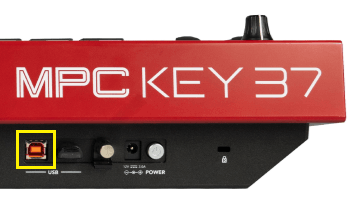
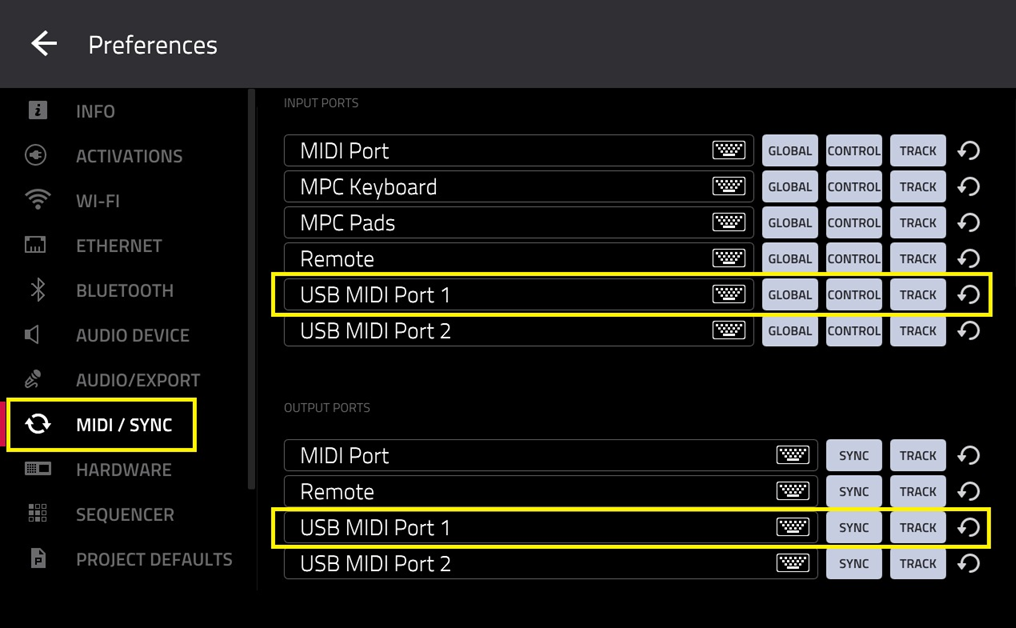
2. Go to Menu > Preferences > MIDI / Sync
Input Ports
MPC Keyboard: Global, Control, Track (On)
MPC Pads: Global, Control, Track (On)
USB MIDI Port 1: Global, Control, Track (On)
Output Ports
USB MIDI Port 1: Sync, Track (On)
MIDI Track Set Up - MPC
This chapter will guide you on how to set up the MPC's MIDI tracks for the purpose of using the keys and pads at the same time in your DAW.
1. In Main Mode, tap on + New Track.
2. You will need to create 2 MIDI Tracks, this can be done by tapping Advanced
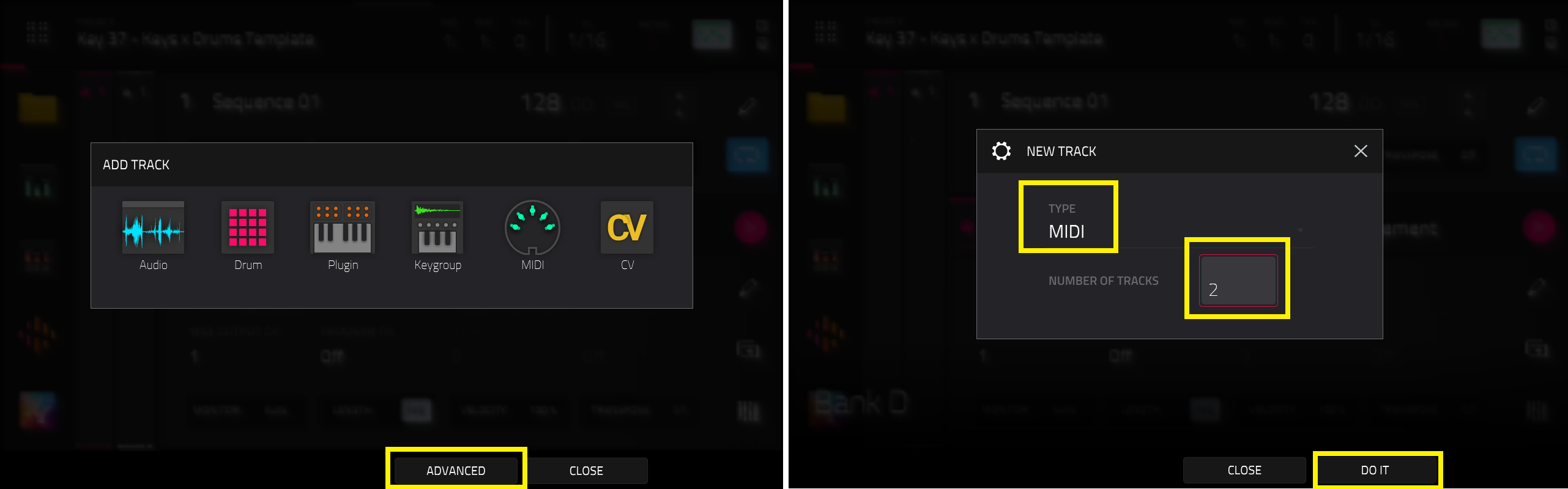
3. Tap DO IT.
The next step is to configure the MIDI routing for each track.
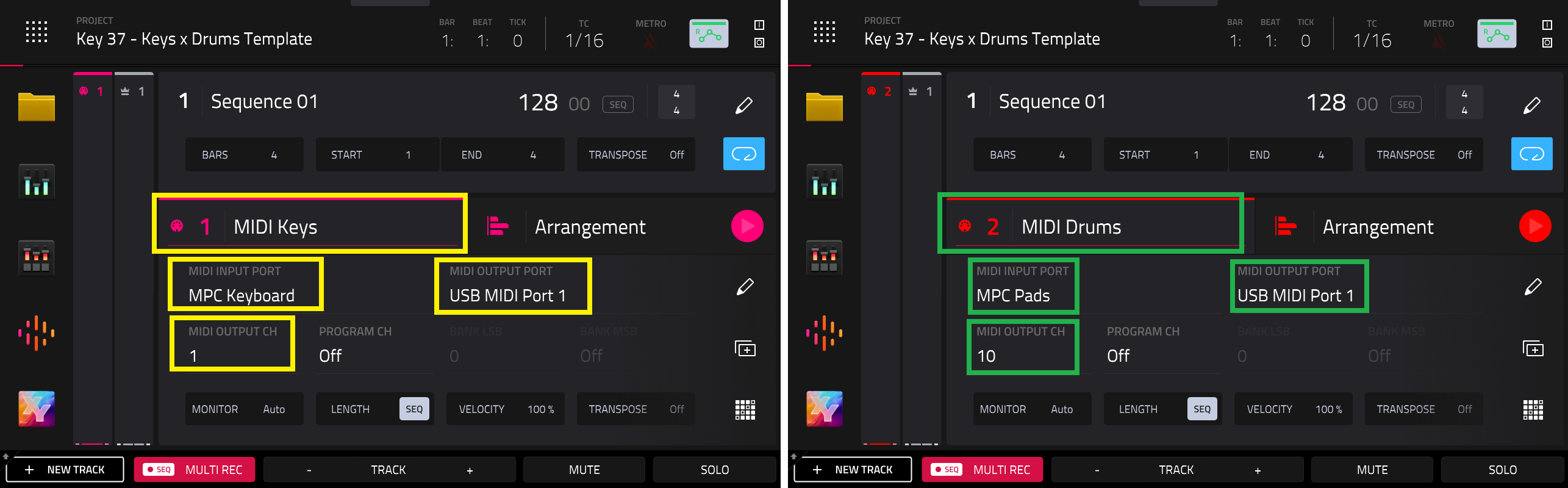
1. Tap on MIDI Output Port, select USB MIDI Port 1 for both tracks
2. Tap on MIDI Input Port select MPC Keyboard for the keyboard track
3. Tap on MIDI Output Port select MPC Pads for the drum pad track
4. Tap on MIDI Output Ch. Each track will need to be on it's own MIDI Channel. We recommend using Channel 1 for Keys and Channel 10 for Pads
Assigning Pad Notes - Pad Perform Mode
In Pad Perform mode, you have the option to set the MIDI notes that the pads will use. On default most DAW/drum plugins will use notes C1 - D#2 or C-2 to Eb-1
First check the midi notes in your drum plugin - then follow the steps below:
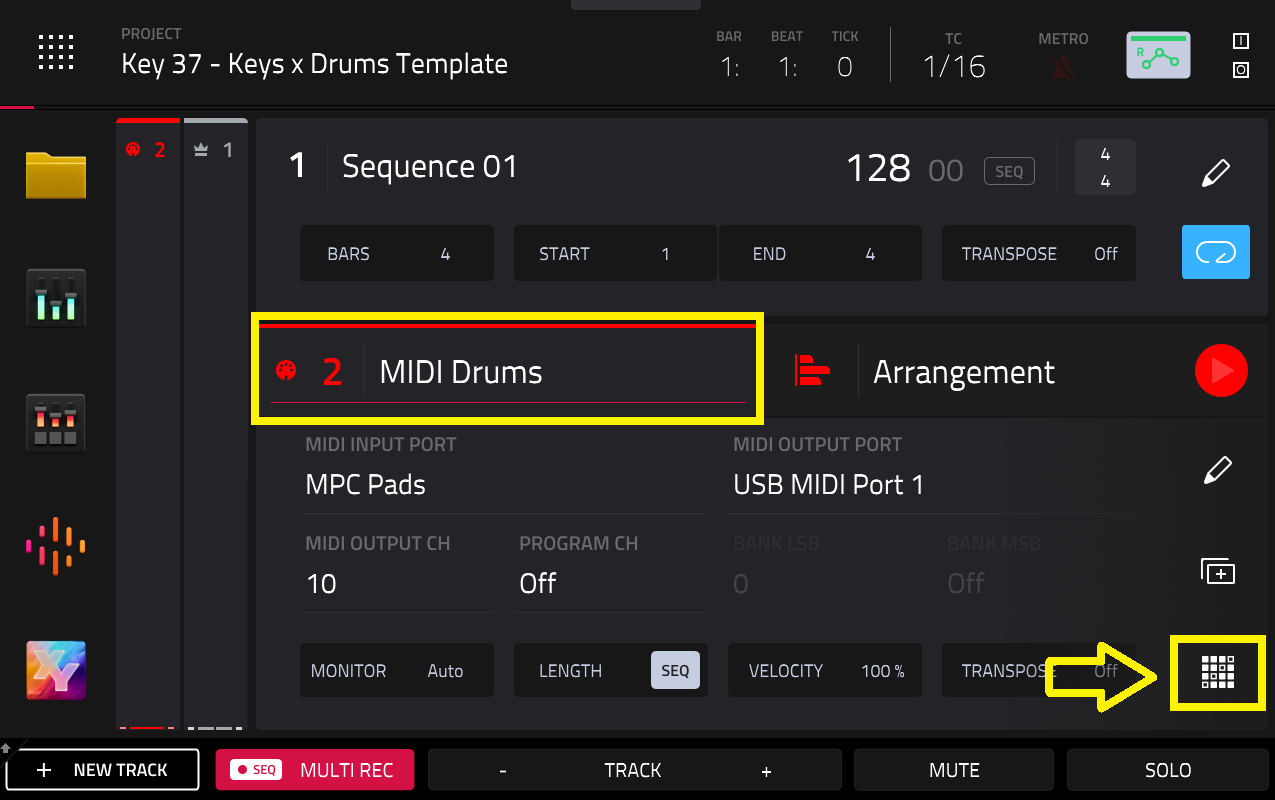
1. Select the MIDI track for the pads, then tap on Pad Perform
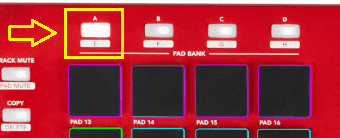
2. Ensure you have selected the appropriate bank. We recommend using BANK A. Press the physical BANK A button on the MPC to enable it.
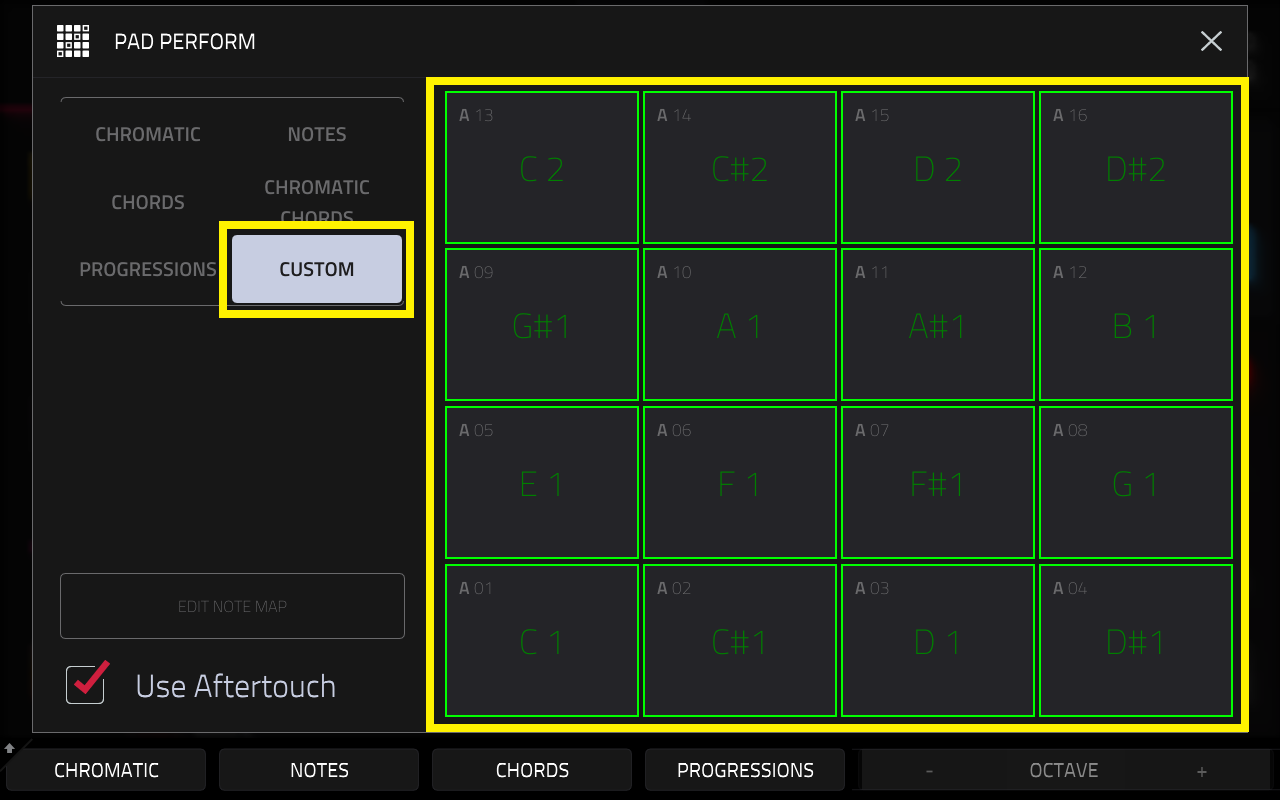
3. Select Custom, then tap on Edit Pad Note Map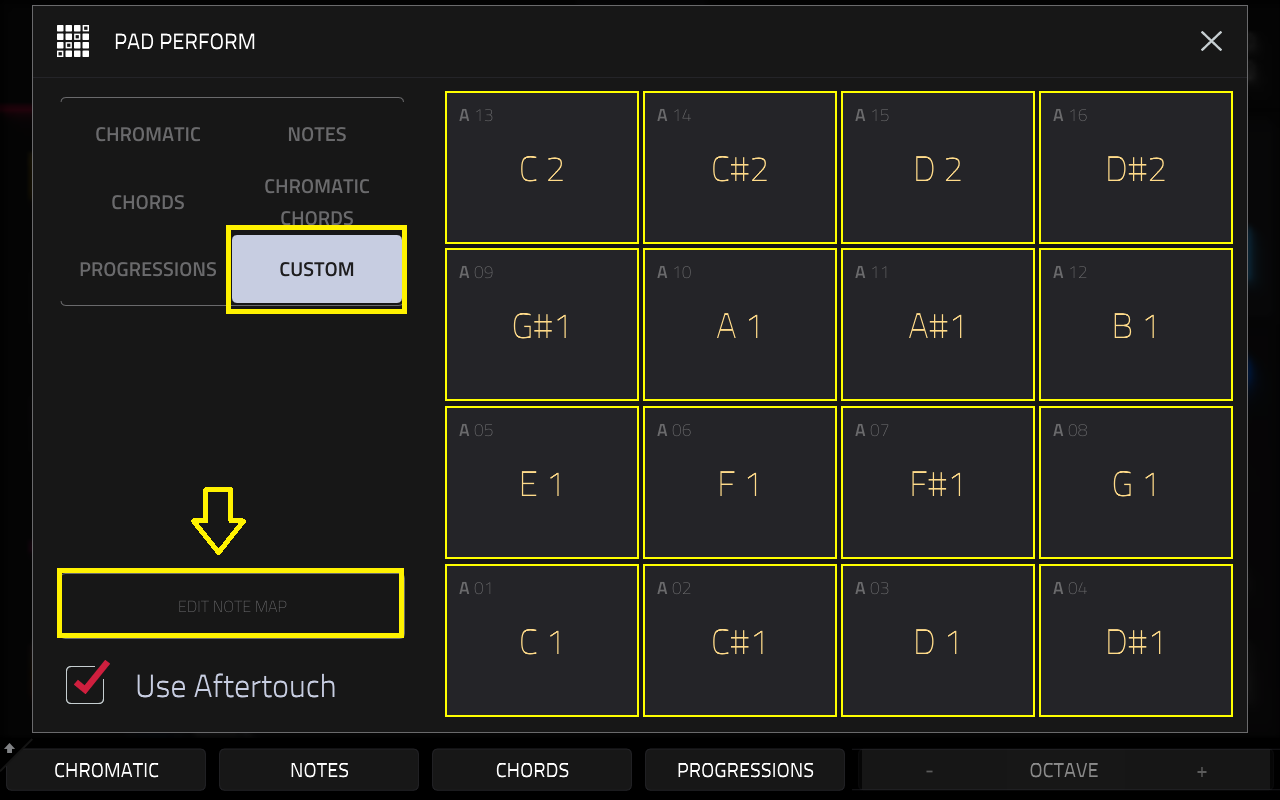
4. Use the Pad field to select a pad, or press the pad on your hardware. Use the MIDI Note field to set the desired MIDI note value for the pad
Tip: To access higher/lower octaves, tap the MIDI Note field 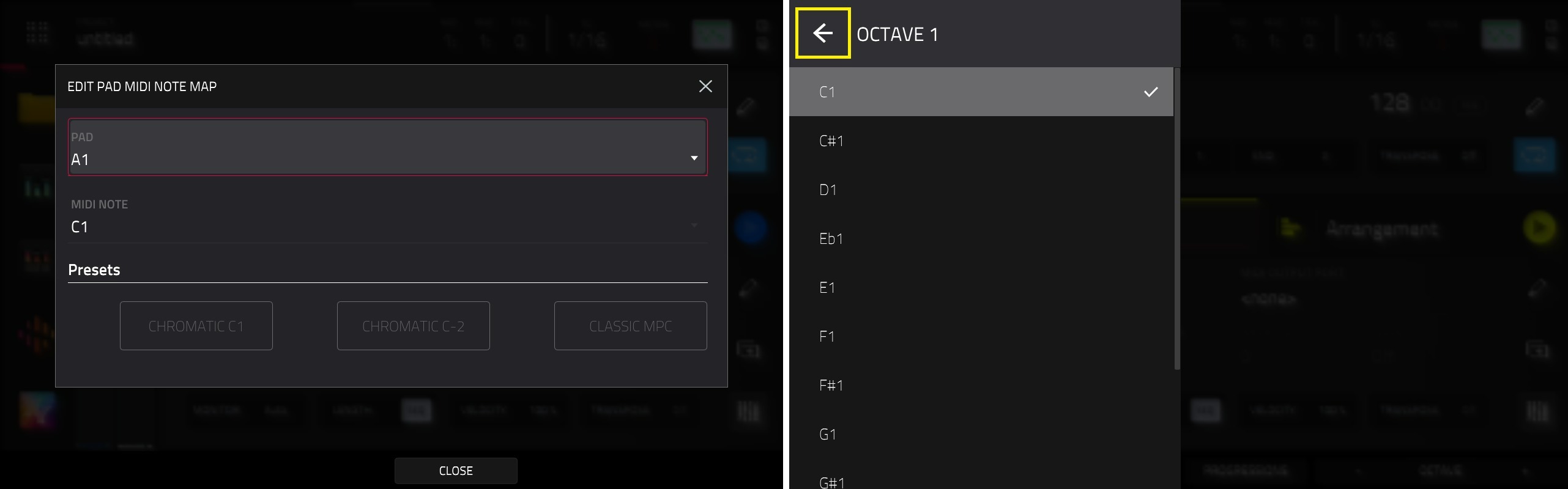
5. You can also use the Presets buttons to assign a preset layout to the pads
Chromatic C1 (an ascending chromatic scale, beginning with C1)
Chromatic C-2 (an ascending chromatic scale, beginning with C2)
Classic MPC (the default MIDI note map of classic MPCs).
Once you have finished remapping the notes, tap Close
6. The MPC's pads should now have the appropriate note mapping. This example is using the Chromatic C1 preset:
Assigning the Pad & Keys - Key Ranges Mode
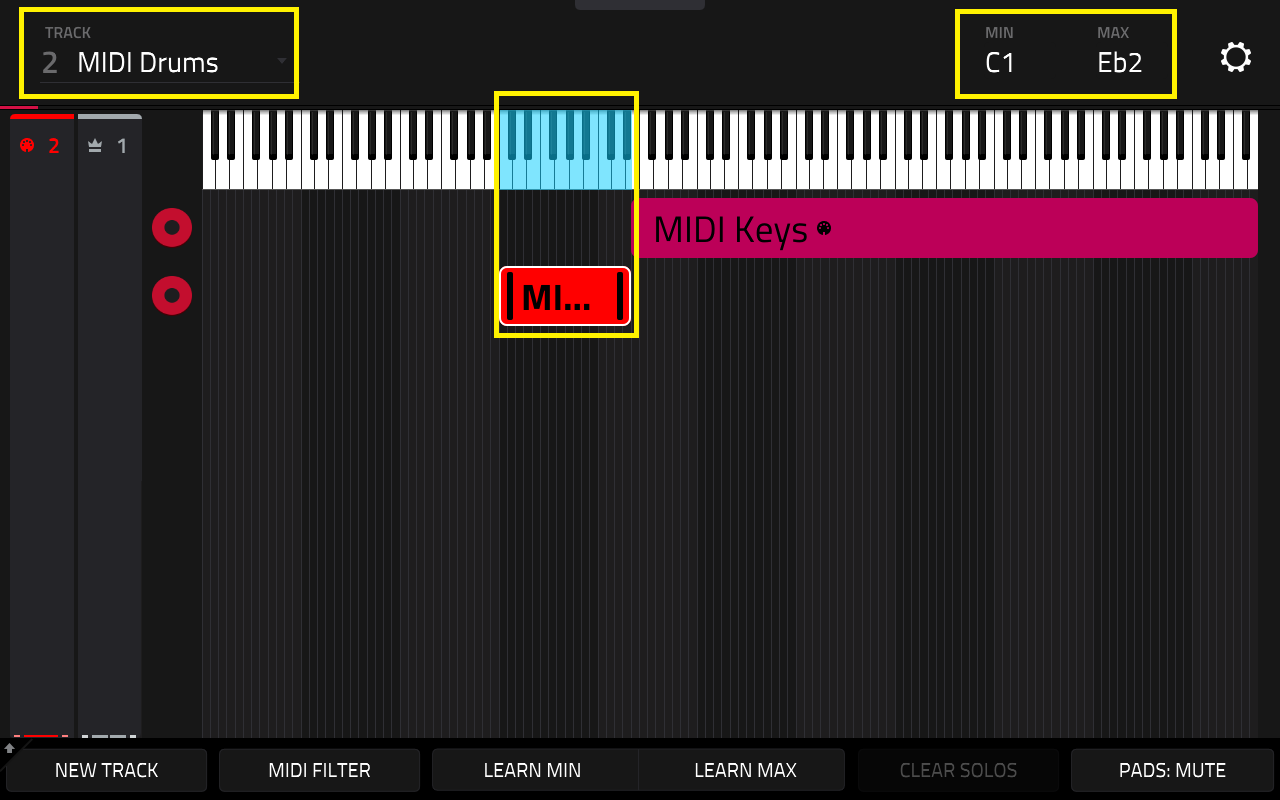
Key Ranges Mode gives you an overview of the MIDI tracks in your project. This step is crucial to ensure the pads and notes do not trigger the same notes in your DAW.
1. Go to Menu > Key Ranges
2. Use the Min and Max field to set the minimum MIDI note value and maximum MIDI note value for each track.
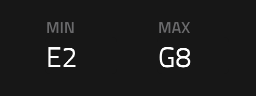
In this example, we have used the Chromatic C1 preset in pad perform mode, so we need to set the drum track range to C1 - Eb2
3. The keys track will need to be set to a range after the last note of the drum pads. In this example, use E2 - GB
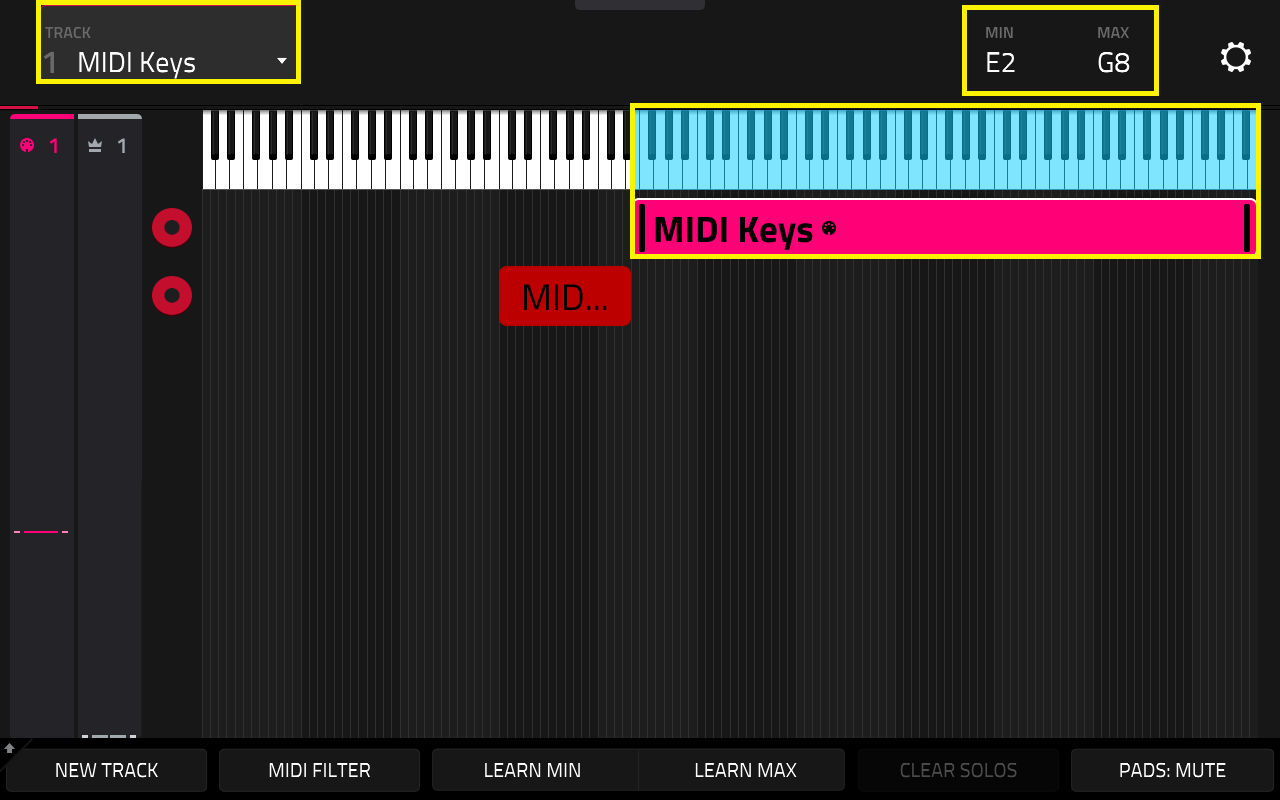
Note: If you prefer to use the entire keyboard range, set the drums to C-2 to Eb-1. Set the keys to E-1 to GB. Keep in mind - if you choose this range - you will also need to change the pad mapping to C-2 to Eb-1 in Pad Perform > Custom > Edit Note Map > Chromatic C-2 Preset.
Refer to the Assigning Pad Notes - Pad Perform Mode chapter for more details.
Record-Arming Your Tracks
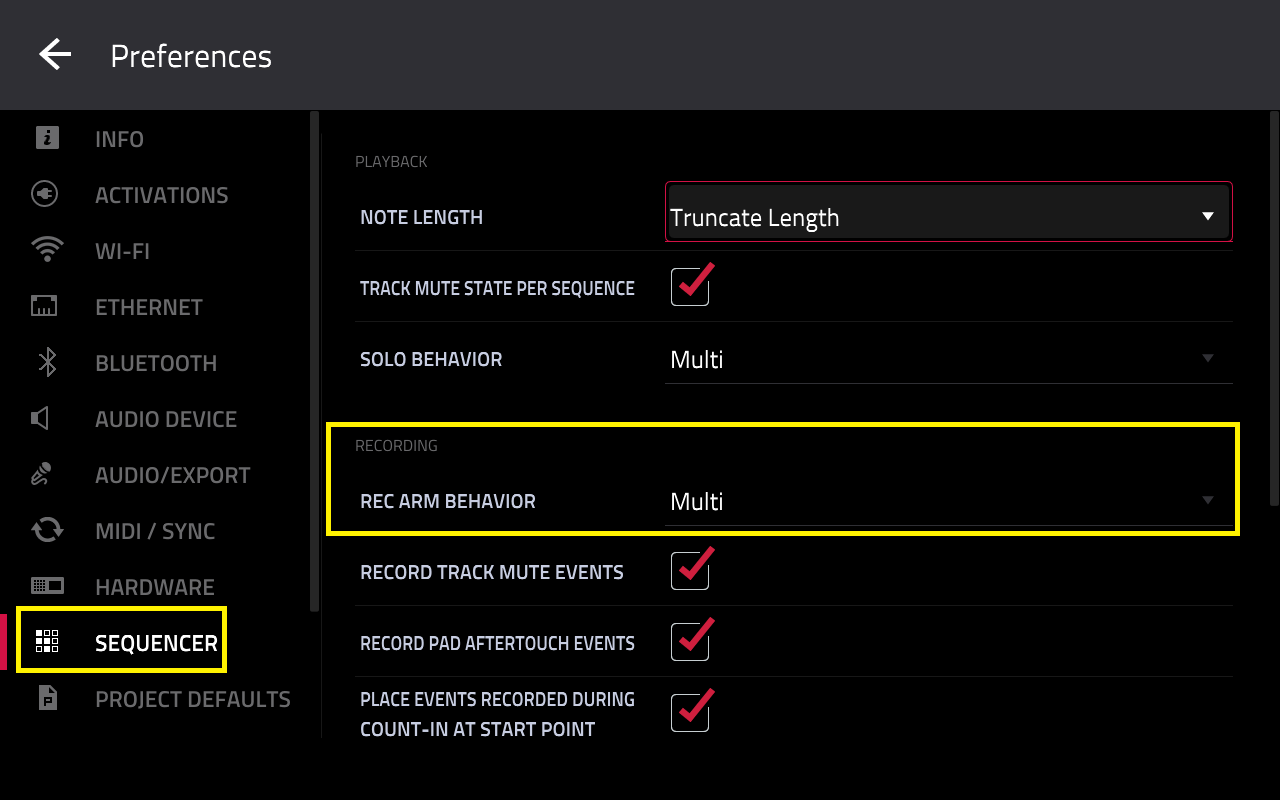
The final step on the MPC is to record-arm both tracks. This will allow the pads and keys to respond simultaneously during recording in your DAW.
1. Go to Menu > Preferences > Sequencer > Rec Arm Behaviour
2. Select Multi
3. Go to Menu > Track View
4. Both tracks will now have the record-arm symbol active (lit red)
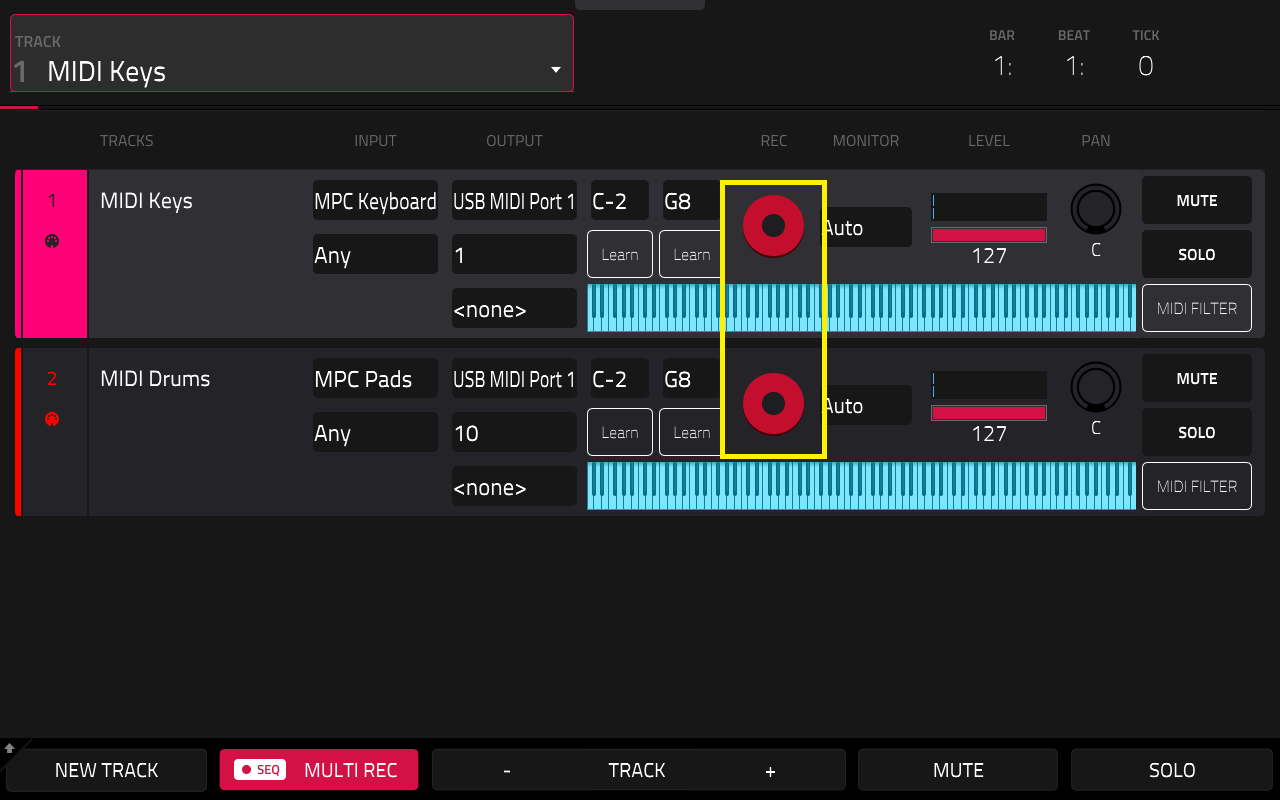
That's it! The MPC has now been set up for MIDI control, refer to the next chapter for the DAW set up
MIDI Track Set Up - DAW
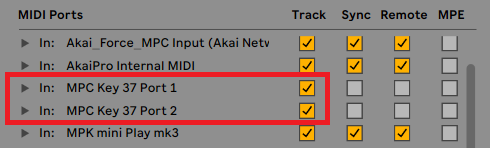
1. Go to the MIDI settings in your DAW, and ensure the MPC Key 37's MIDI ports are enabled using the appropriate USB MIDI Port name/number:
- MPC Key Port 1 (USB MIDI Port 1)
- MPC Key Port 2 (USB MIDI Port 2)
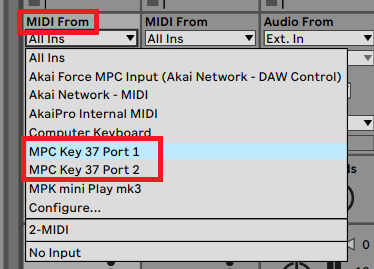
2. Create 2 plugin tracks, and select the appropriate 'MIDI From' port for the tracks. This should be MPC Key 37 Port 1:
3. You will also need to set each track to their own MIDI Channels. Use the same channels that you set for the tracks on the MPC - i.e Channel 1 for Keys and Channel 10 for Pads
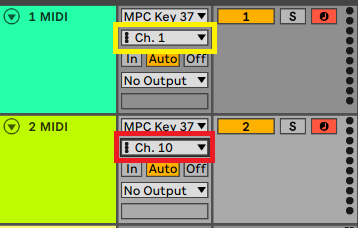
4. Ensure that both tracks are record-armed (ready to record)
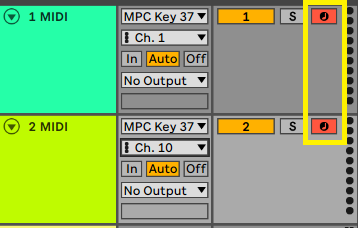
That's it! - the MPC Key 37 is now set up as a MIDI controller in your DAW. You can load your VST sounds to each track to play both the keys and pads at the same time.
Note: The transport buttons will not send MIDI or be mappable to your DAW.
Was this article helpful?
That’s Great!
Thank you for your feedback
Sorry! We couldn't be helpful
Thank you for your feedback
Feedback sent
We appreciate your effort and will try to fix the article