How to Route Kontakt to Multiple Outputs in PreSonus Studio One
When using multiple instruments loaded in Kontakt, you may want to route them to separate channels in Studio One. For example, if you wish to use different insert/send effects or apply the Studio One volume and panorama controls to each instrument individually.
Note: These instructions apply to all recent versions of Kontakt. If using Kontakt 6, simply choose the plug-in labeled "Kontakt" and follow this guide.
TABLE OF CONTENTS
- Configuring Kontakt's Outputs Section
- Creating Instrument Output Channels for Kontakt in PreSonus Studio One
- Routing the Instruments to Separate Outputs in Kontakt
Configuring Kontakt's Outputs Section
- Load one Kontakt VST plug-in. Click the plus symbol (+) on the Studio One track area to access the Add Tracks menu.
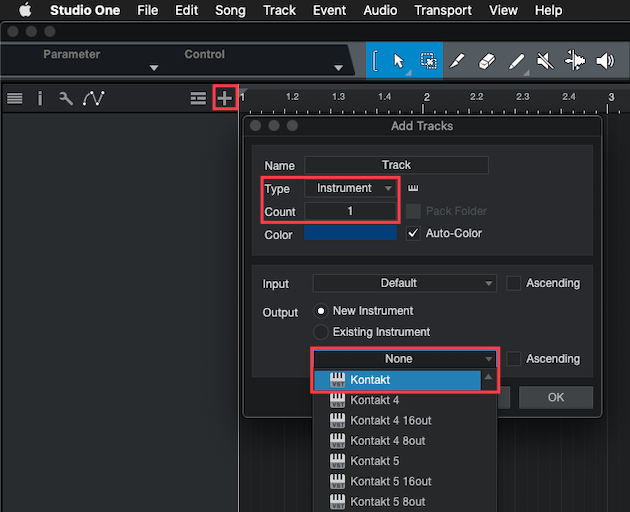
Note: Mac users have the option to select the Kontakt AU or VST plug-in. In this example, the Kontakt VST has been selected. This can be identified on the plug-in listing by the small keyboard icon that is labeled VST.

- Once Kontakt is open, enable Outputs in the Workspace menu to make the Outputs area visible at the bottom of Kontakt's interface.
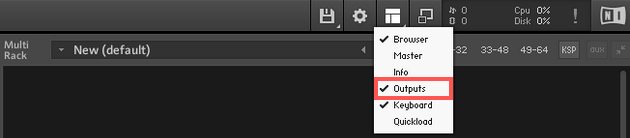
- The Outputs section is now displayed in the lower half of the Rack space.
Click the '+' button to display the Outputs options dialog.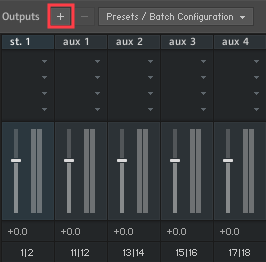
- Select the Quantity of new master channels you want to add by clicking the Quantity field and dragging the mouse up or down. The number of channels lets you choose the channel configuration of all new Outputs, e.g. 1 for a mono configuration, or 2 for a stereo configuration. In our example, we want to route Kontakt to a total of 8 stereo output channels, so we choose a Quantity of 8 and set Number of channels to 2.
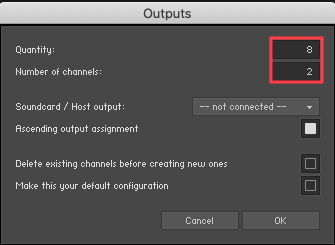
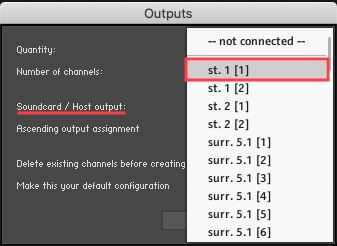
- In the Soundcard / Host output drop-down menu, select st. 1 [1].
- Finish by ticking these remaining boxes:
- Ascending output assignment (assigns each new channel to the next available outputs).
- Delete existing channels before creating new ones (creates all new output channels).
- Make this your default configuration (saves setup for future Studio One projects).
- Click OK to confirm.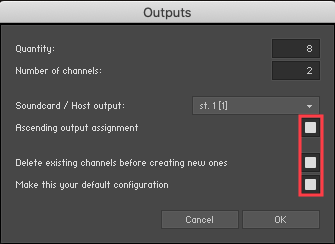
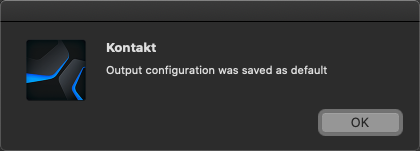
- If the steps above have been carried out correctly, you will now receive a message confirming the Output Configuration was saved as default. Press OK to proceed.
Kontakt's Outputs Section now shows the 8 Master Channel Outputs, each routed to a different stereo output of Studio One.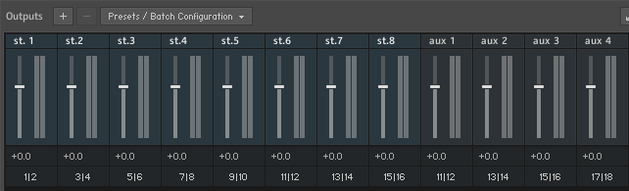
Creating Instrument Output Channels for Kontakt in PreSonus Studio One
- Open the Kontakt plug-in window, and click the outputs tab at the top of the Studio One Instrument Editor window. Tick the boxes representing the first 8 available outputs. These directly correspond to the channels in the Kontakt Outputs section.
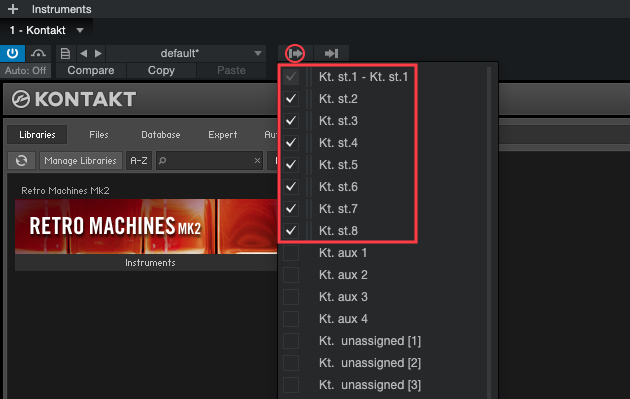
Note: If the new Kontakt output channels (e.g. Kt. st.2, Kt. st.3, Kt. st.4, etc.) are not named exactly as shown above, please remove the Kontakt VST plug-in, and re-insert it into the same Instrument track. The Kontakt output channels should now display correctly.
- Check the Studio One Mix section. After ticking the boxes in the previous step, the extra audio channels are automatically created in the Studio One mixer.
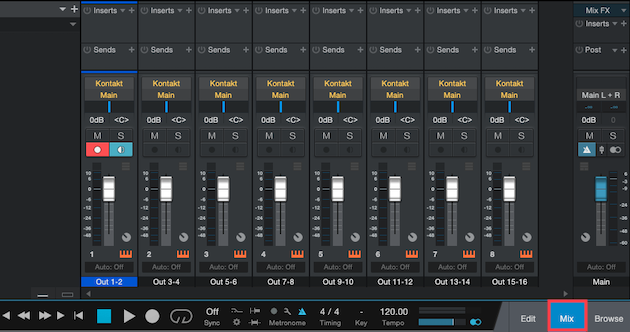
Routing the Instruments to Separate Outputs in Kontakt
- Route all Instruments loaded in Kontakt's Instrument Rack to separate Outputs. When loading Instruments in the Rack, they are routed to the first stereo output st. 1 by default. Select the desired Output for each Instrument from the Instrument's Header. In this example, we route a Retro Machines Instrument to the second stereo output named st.2 [2 ch. routed 3|4].
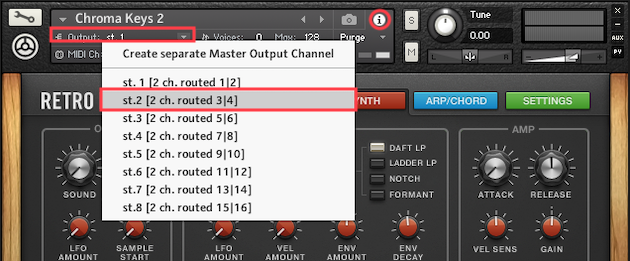
- Repeat this procedure for all Instruments loaded in the Rack, choosing one available stereo output after the other.
Now, when you play an instrument in Kontakt, its audio signal will be routed through the respective Studio One Aux track to which its output is assigned to.
Was this article helpful?
That’s Great!
Thank you for your feedback
Sorry! We couldn't be helpful
Thank you for your feedback
Feedback sent
We appreciate your effort and will try to fix the article